Research

RNA structure as a measured, modeled regulator of biology.

The lab works on the experimental and computational tools needed to read RNA folding inside living cells — and on the biological systems where structure changes outcome: viral genomes, human transcripts, splicing, and disease.

Rouskin Lab research overview showing folded and unfolded RNA states
01 — Computation

RNA language: how sequence models expose RNA structure.

Sequence-trained RNA language models can learn statistical dependencies between distant nucleotides. We interrogate those dependencies with mutation scans, contact maps, and model uncertainty to ask where sequence alone recovers structural constraints.

We then compare model-derived couplings with in-cell probing data: which signals look like base-pairing or functional motifs, which are artifacts of sequence statistics, and where living cells fold differently from what a model expects.
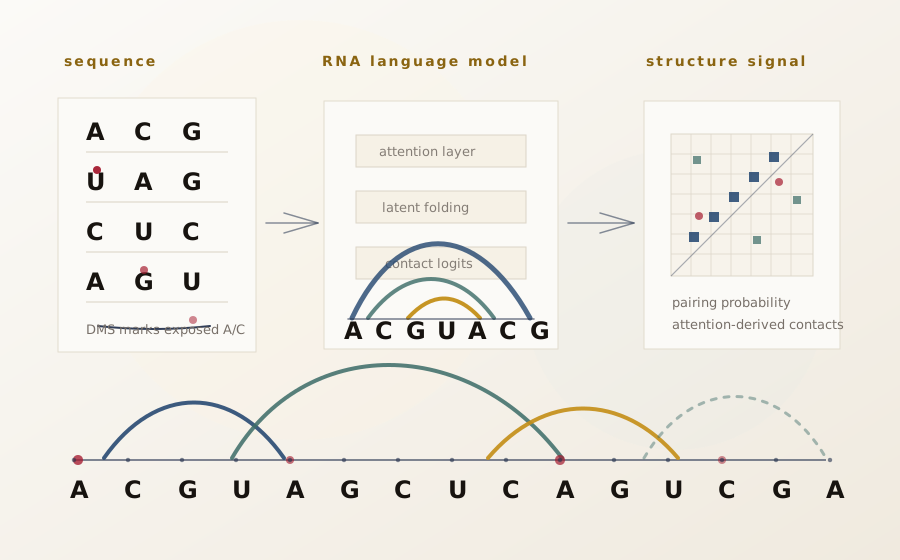
RNA language model diagram showing sequence tokens, dependency arcs, a contact map, and probing validation signals.
02 — Measurement

In-cell RNA structure probing with DMS-MaPseq.

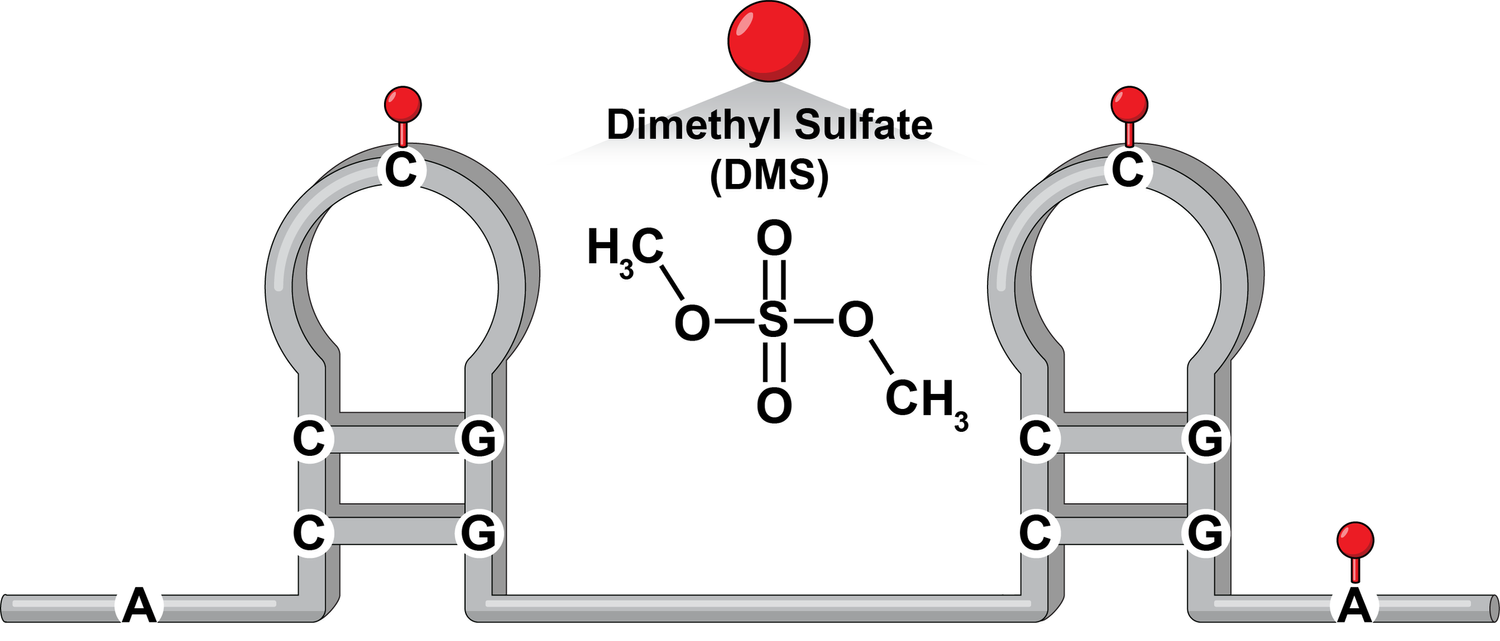
Dimethyl sulfate (DMS) chemically modifies the Watson-Crick face of unpaired adenine and cytosine. Reverse transcription reads modifications as mutations, and deep sequencing turns chemistry into quantitative, nucleotide-resolution accessibility data — for full transcripts inside living cells.

On top of this measurement, structural ensembles can be inferred under statistical and biophysical constraints. We continue to extend the method to longer RNAs, lower abundance targets, and long-range interactions.

DMS chemical probing of A and C bases in folded RNA.
03 — RNA ensembles

One sequence, multiple structures.

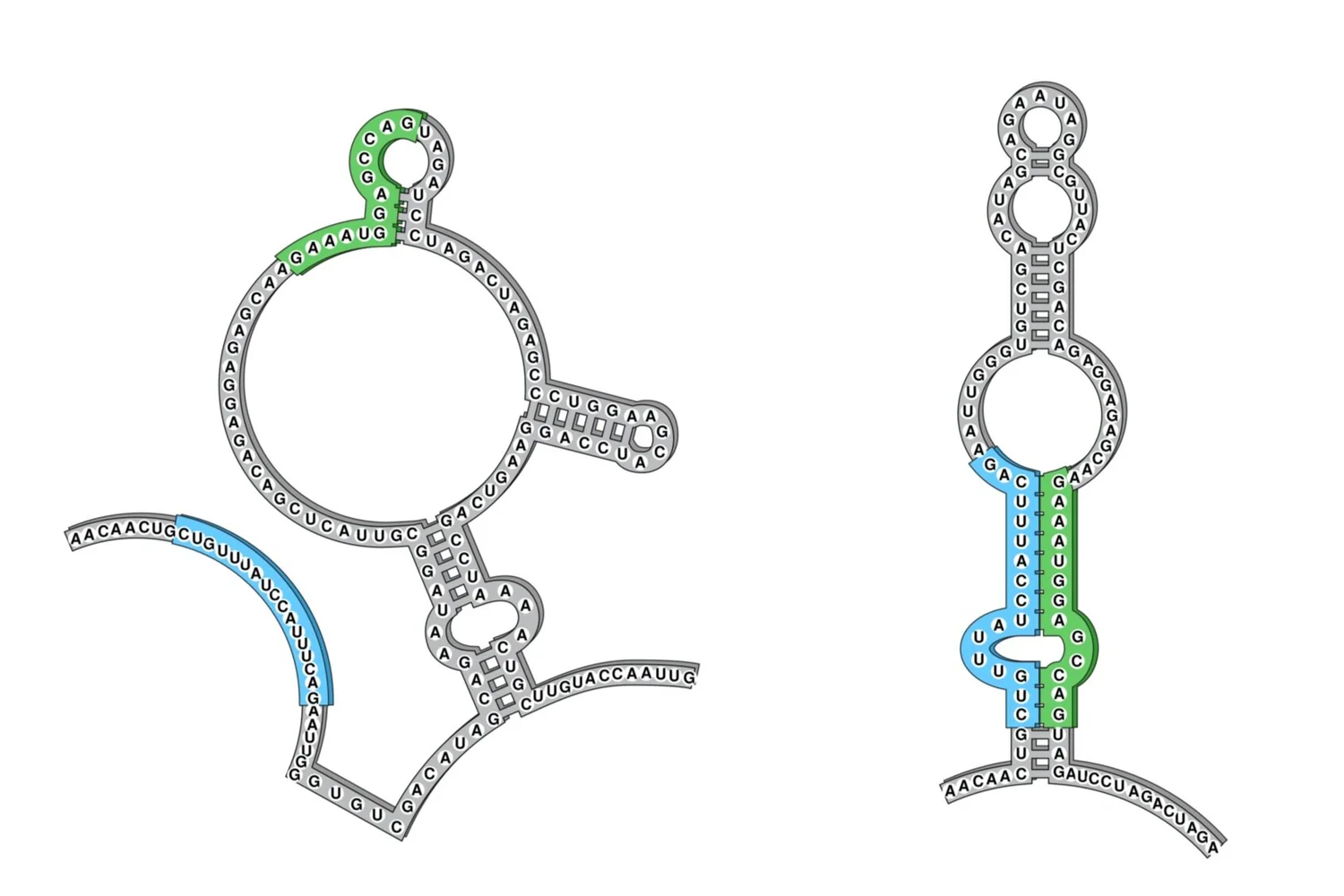
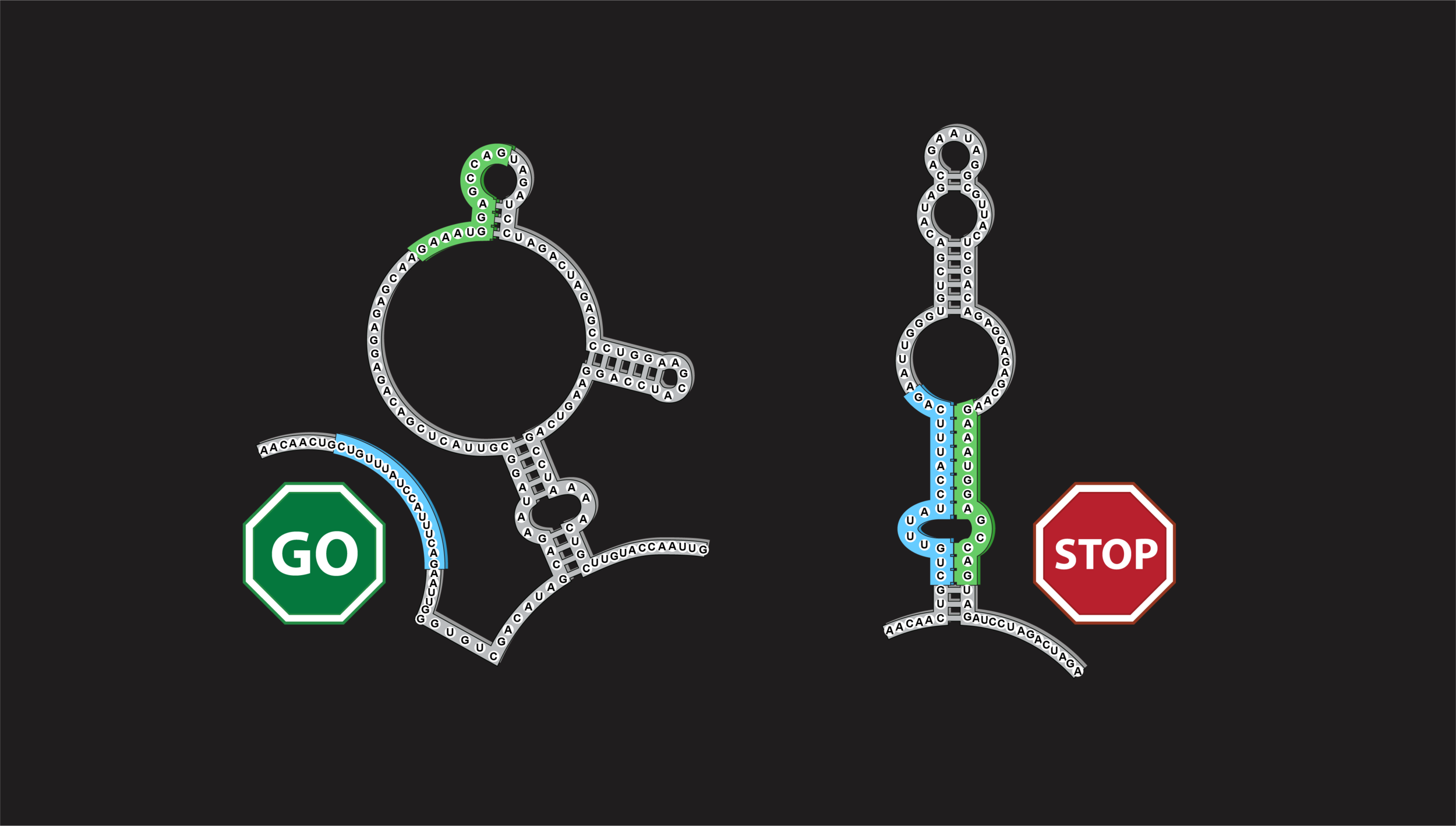
A single RNA can fold into more than one stable structure, and the relative populations of those states can change with the cell's state, the presence of binding partners, or the activity of co-transcriptional folding. We study when alternative conformations coexist, how they are stabilized in cells, and when they matter biologically.

Two alternative RNA conformations of the same sequence.
04 — Viral RNA

RNA structure as a regulatory program in viral genomes.

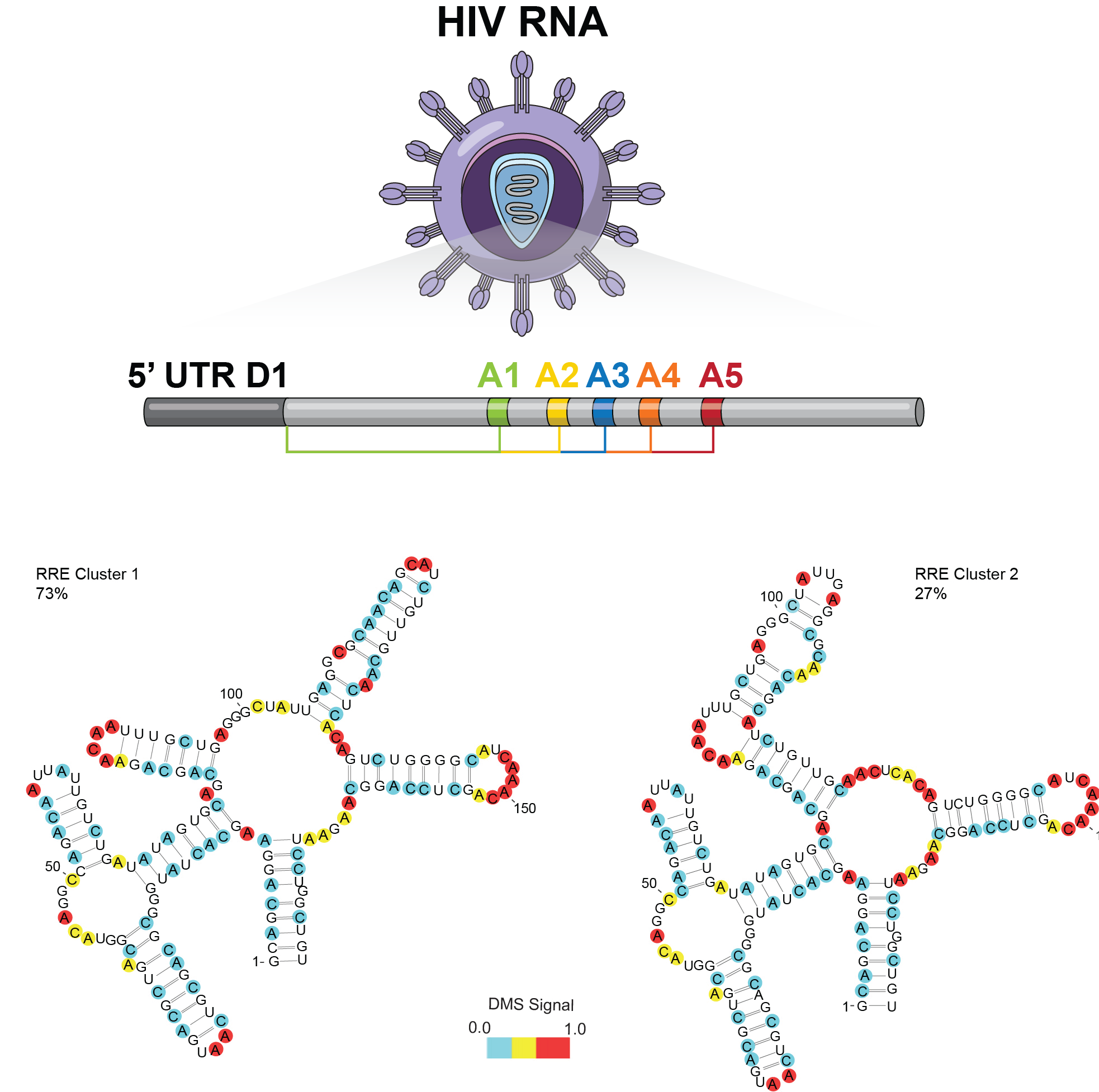
RNA viruses encode small numbers of genes but rely on extensive RNA structure to control replication, splicing, translation, and host interactions. We map structured elements in HIV-1 and SARS-CoV-2 genomes in their host context — including long-range base pairings that span thousands of nucleotides.

HIV-1 RNA structure diagram.
05 — Human biology

RNA structure at splice sites and in disease.

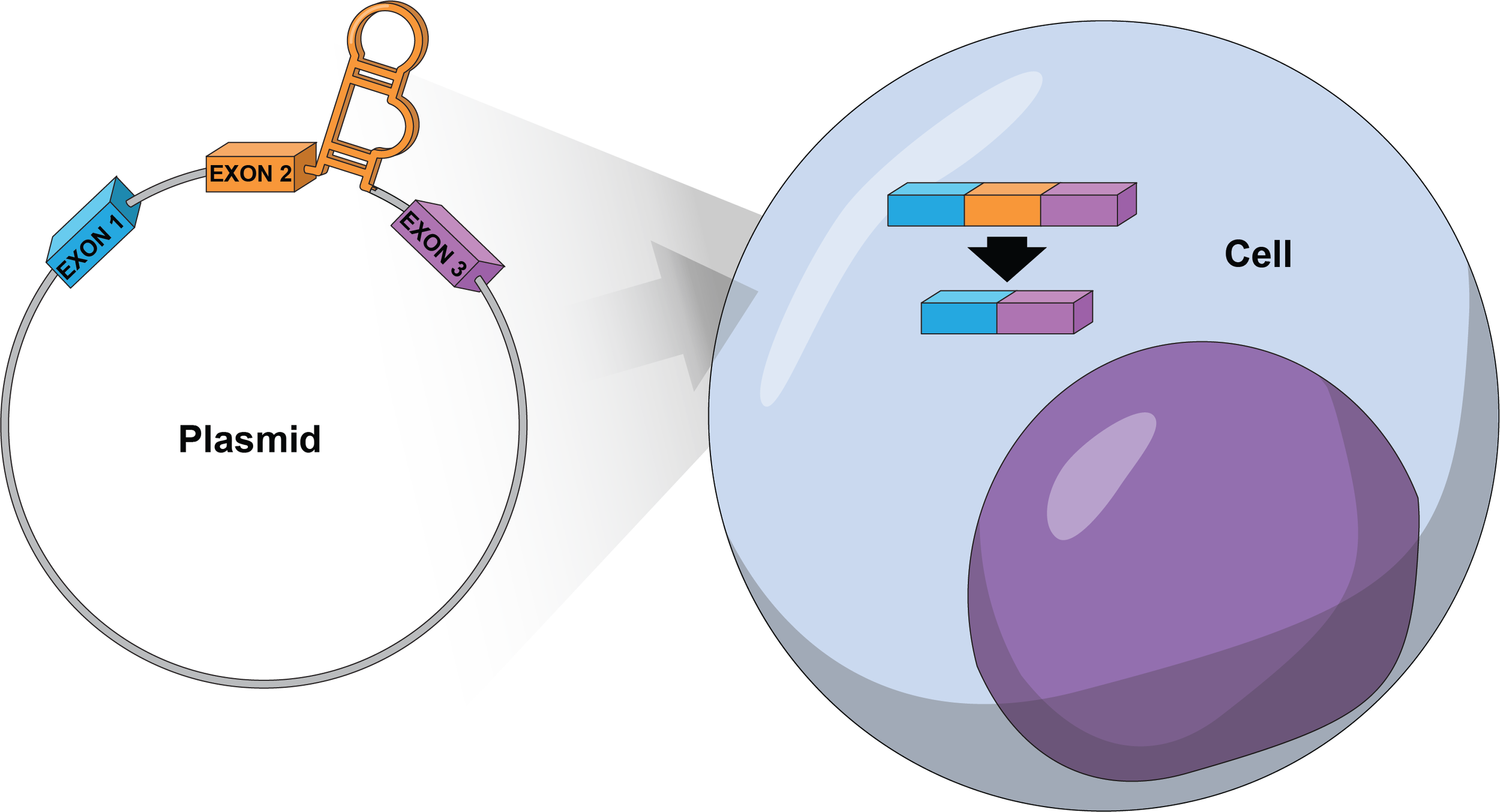
Alternative splicing expands proteomic diversity and contributes to many human diseases. We study co-transcriptional RNA folding around splice sites in vivo, develop quantitative models for RNA folding and RNA–protein interactions, and apply these tools to disease-relevant targets including telomerase and mitochondrial transcripts.

Alternative splicing and RNA structure visual.